But Does It Rhyme? The Poetry Editors Blog

Fairy Tales Can Come True …

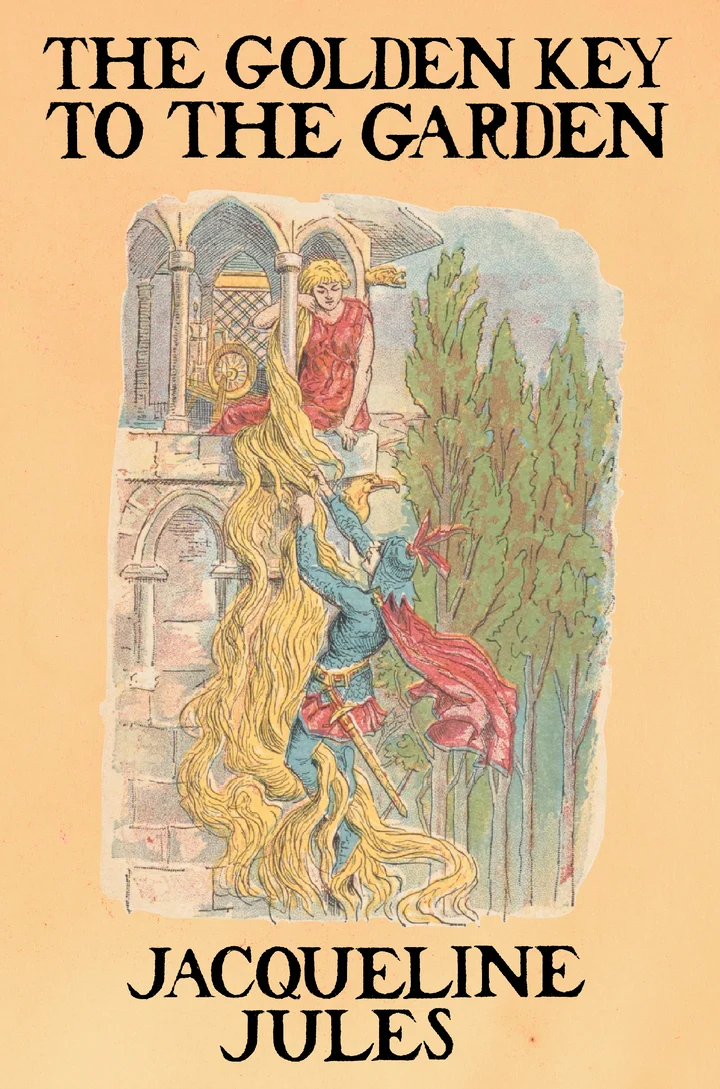
The Golden Key to the Garden … but you don’t have to be young (or even young at heart) to enjoy them. And, if you’re my friend Jacqueline Jules, you can learn life lessons from fairy tales and share those lessons in charming poems like this:

The Fisherman’s Wife

Not satisfied with the cottage the fish conjured in place of a shack, she requested a castle. Luxury not enough, she demanded power. We all know where her greed ended— in the hovel where she began. But what’s the warning for me? Not to ask too much if by chance I meet a magic fish? Cottage or castle, there’s always someone with more.
That piece is from Jackie’s new chapbook, The Golden Key to the Garden, a beguiling collection of fairy tales told in deceptively simple language, and always with a gently told moral. Here’s a message I particularly like, from “Over the Rainbow”:
Even in Oz, troubles don’t melt like lemon drops and no one gets back to Kansas without dousing the Wicked Witch
“There is a reason why iconic tales are told and retold from generation to generation. A reason why they become reference points in our culture,” says the publisher, Bottlecap Press. “They reflect our fears and foibles, offering timeless insights. In The Golden Key to the Garden, poet Jacqueline Jules shares personal discoveries gleaned from her favorite stories.” Your own personal discoveries await you in The Golden Key to the Garden.

Coffee and Poetry

Ever since I’ve retired, I’ve found a great place to settle down with a book of poems is the local coffee shop. Grande latte in hand, I page through the book, reading aloud to myself, jotting down memorable phrases, seizing on the barest hint of an idea that just might spark a poem of my own.Sometimes the spark comes from watching other coffee drinkers. Sometimes it comes from, of all places, the restroom. My thanks to The RavensPerch for publishing three of my poems recently, including this one. Raven's Perch

Coffee Shop Graffiti

Who writes reclaim yourself on a bathroom wall up there with declarations of undying love misspelled insults and bad jokes scrawled on the scratched paint broken tiles underfoot harsh light overhead Maybe you with your briefcase and latte, foam blowing like sea spume, or you there with the newspaper and frown— is it the headlines or your life that troubles you Or maybe you, mommy, trundling in your bundle of squealing potentiality— doctor lawyer merchant chief someday something fine and good and better than I could ever be But now each day another chance for reclamation, for taking back what’s lost while you still can another chance to face the dare reclaim yourself
Read this, plus “The Consolation of Donuts” and “That Far Beach,” here.

Flowering Poetry

Marigold

Marzia Dessi is one of those people who seem to have done everything -- books, articles, poetry, presentations, studies. And still she has time to produce a literary journal, Otherwise Engaged. I was delighted to have three poems included in a one-time Special Spring Issue. Here's one of them:

Marigolds of Memory

I coaxed you from the earth from seed from sunlight and water to be my blazon my badge of light and you opened like a supernova sun-spike petals bursting from your still center Marigold of memory in my first flowerbed a child’s delight of dirt and expectation and then your spendthrift shower of garden gold a wealth of blossom for the plucking Deconstructed in the fall your seeds are sliver arrows packed tight in their quiver waiting for a wind to ride on thin tricolor shafts with flights of fire Herb of the sun Mary’s gold

Thanks, Marzia!

A Hundred to One

John Barr Poetry

Years ago, a teacher told me to read 100 poems for each one I write. I’ll admit I don’t keep careful count, but I do read lots of poems, including those that show up daily in my email. Here are a few I turn to each morning:

  • Poetry Daily, which includes not only a poem every day but a brief commentary on "What Sparks Poetry."
  • Only Poems Daily, an independent magazine that says, "Wake up to a new poem every day and enjoy the slower life of poets."
  • Poem-a-Day, brought to us by the Academy of American Poets, founder of National Poetry Month.
  • Poetry Town, a daily newsletter from George Bilgere, who not only offers a different poem every day but tells us why he chose it.

There are others, of course, including an excellent email newsletter I've recently discovered: John Barr Poetry, which discusses aspects of poetry. A recent email, titled "The Work of New Language," had this to say about metaphor:

A metaphor shows the unwillingness of anything to stop with itself. A determination to turn soup to pudding. Fresh knowledge agitates a language. It requires words to serve new purposes -- first as metaphors (the surgeon feeling for the landmarks before the first incision), then as denotations, settled into the dictionary as if they had always belonged there. Emotion, by itself, does not do this. It repeats. It circles. The work of poets is something more difficult: to use knowledge to express emotion in new language -- to bring into being what did not previously exist in words, but was waiting there all along.

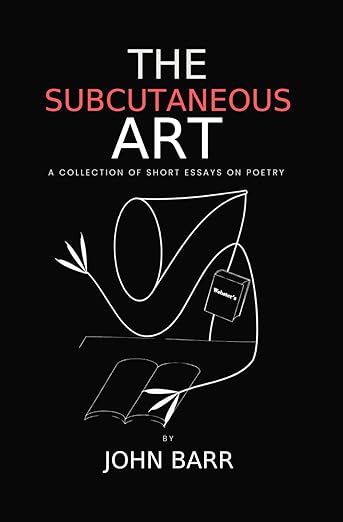
Want more? Try Barr's brief essay book The Subcutaneous Art.

On The Road

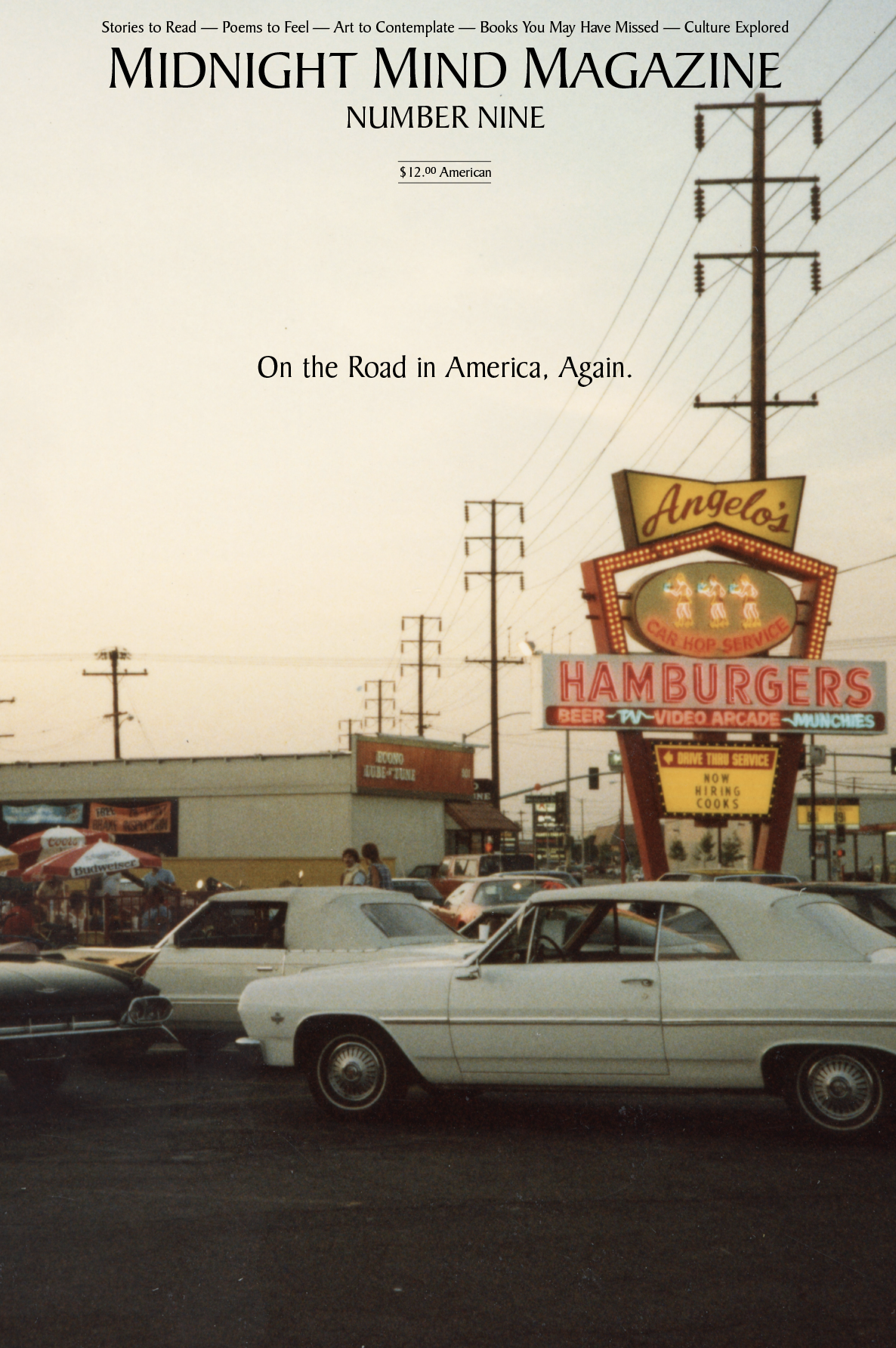
Midnight Mind journal cover

A couple of cars ago, the family drove West … such a wide country, such wonderful vistas along the way. It was a great trip, but the drive back was something else again. I’ve thought of that drive often and finally wrote about it. Now a wonderfully handsome and impressive print journal called Midnight Mind published my poem “Flatland” in a section called “An Open Road Poetry Mix Tape (14 poems to recite on the open road.” You’d need to take a long drive to recite them all, but here’s mine.

Flatland

Spikes of lightning speared the earth as thunderstorms moved on the mountains. A tarantula cast a crook-leg shadow on the road ahead. Baked under a blazing sun and beguiled by the thorny plants that stood in for the trees of home we went on to Santa Fe with its picture postcard pueblos and up to Colorado ski country, then turned the Chevy East for home. But Kansas. Kansas stopped us with its mile on mile of featureless flatness. Not a tree or house in sight the horizon so wide you could almost see earth’s curve out there. I felt something at my back and thought of the pioneer wives running mad from wind and isolation not born to it like Kiowa and Comanche. At the next intersection we turned right trusting the road south to take us back to high country.

Many thanks to editor Brett Van Emst for including my poem in this special section.

A New Venture

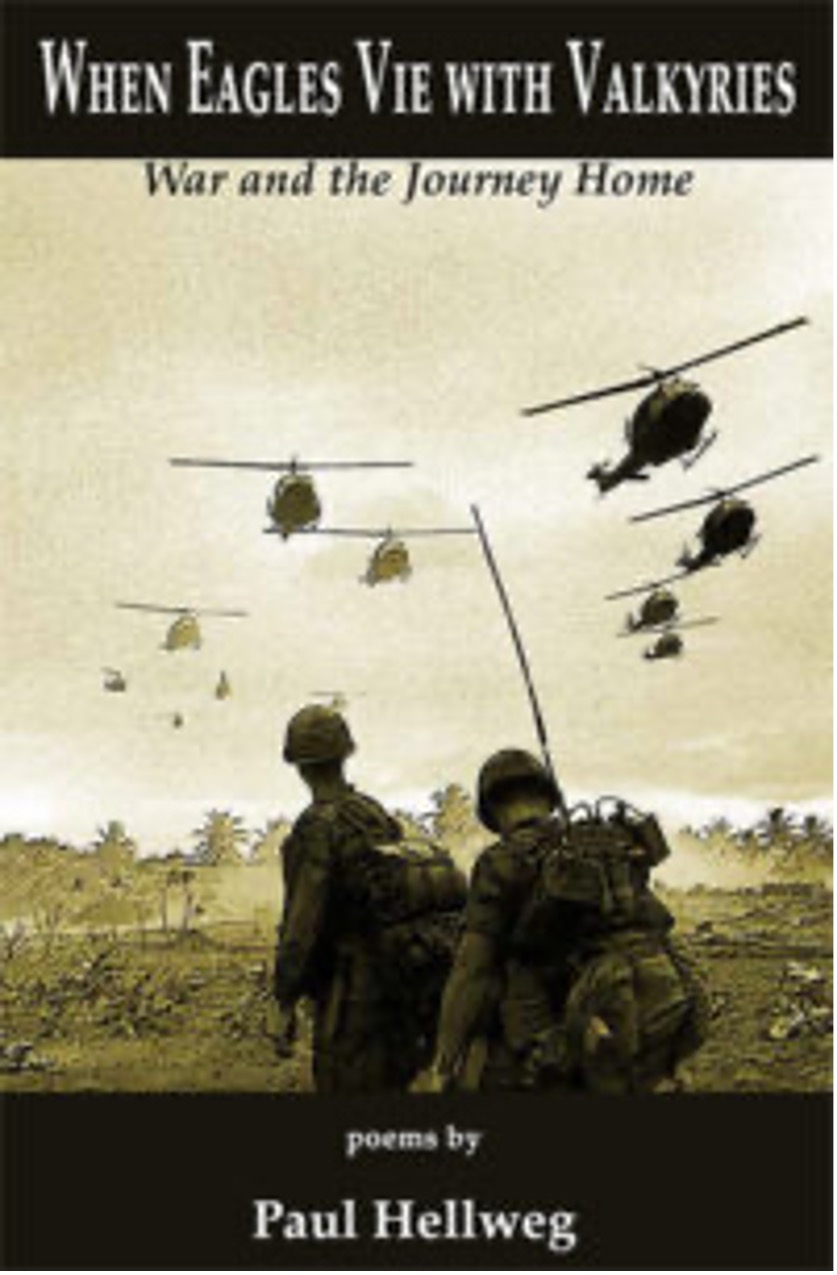
When Eagles Vie with Valkyries book cover

Some months ago, I wrote about my friend Richard Eric Johnson and included “The Hurricane’s Eye,” one of his poems published in Vietnam War Poetry, an impressive online archive established by Paul Hellweg “to foster greater understanding of the Vietnam War and its impact on America, Vietnam, the veterans of both sides, and all people involved either directly or indirectly.” Since then, Eric suggested I apply to serve as poetry editor for that site.

It never occurred to me to seek such a position … and I have no real knowledge of the Vietnam War or indeed, any military action. But here I am, VWP poetry editor. And I’ve even taken on editing a chapbook by a friend of the site’s founder.

Looking Up & Considering Tomorrow

America's Future anthology cover

In a time of discord and division, what lies ahead? That’s the question behind America’s Future, an anthology of poetry and prose from the Washington Writers’ Publishing House that speaks to joy and resilience amidst today’s political turmoil, according to a review in Poets & Writers.

The volume opens with remarks by U.S. Representative Jamie Raskin from an April rally on the National Mall. A collaboration between E. Ethelbert Miller and Miho Kinnas is the first poem in the book:

To Write Is to Flower

We use the dictionary to cut the stems of our poems. Inside the vase they blossom paying attention to prepositions. At night petals fall like adjectives. A stanza begins to reminisce about the past. Elders spoke of a time when people cut flowers with their tongues It is a time to remember the milky liquid that leaked from the stalks. The future sticks to our fingers calling us to write and to flower.

A total of 164 writers contributed to America’s Future, offering a breadth of responses from joy to sorrow, from despair to rage. A sobering but inspiring read.

No matter what you think about the future, the nation’s capital is a good place for poetry. Not only is the Washington Writers’ Publishing House the longest continuously operating nonprofit literary small press in the U.S., but the Federal Poets is the oldest continuously active poetry group in the Washington D.C. area. The Federal Poet is published twice a year, and I was lucky enough to be included in the Summer 2025 edition (thanks, Jonathan Lewis).
Federal Poet Summer 2025 cover

Cosmology 101

The Story of Our Universe May Be Starting to Unravel — New York Times, 9/3/23

Just when we believe we understand how things work, there’s something new something else to scrutinize something that keeps us growing And now the wondrous Webb telescope is challenging our view of it all Look at me, says a very distant galaxy, I’m older by far than you can imagine Look how quickly I formed, says the galaxy, much earlier than you can contemplate Time to rethink what you think you know This is the universe calling, reminding us there’s always more to learn